
Entry Requirements
You will need a minimum of 5 GCSEs at Grade 4 including English Language and Maths, or completion of a Level 2 course with merit (plus English Language and Maths).

Study Mode
Full time

Duration
2 years

Timetable
Speak to Tutor
Key features and Benefits
- Study at one of the Top 3 Colleges in England*
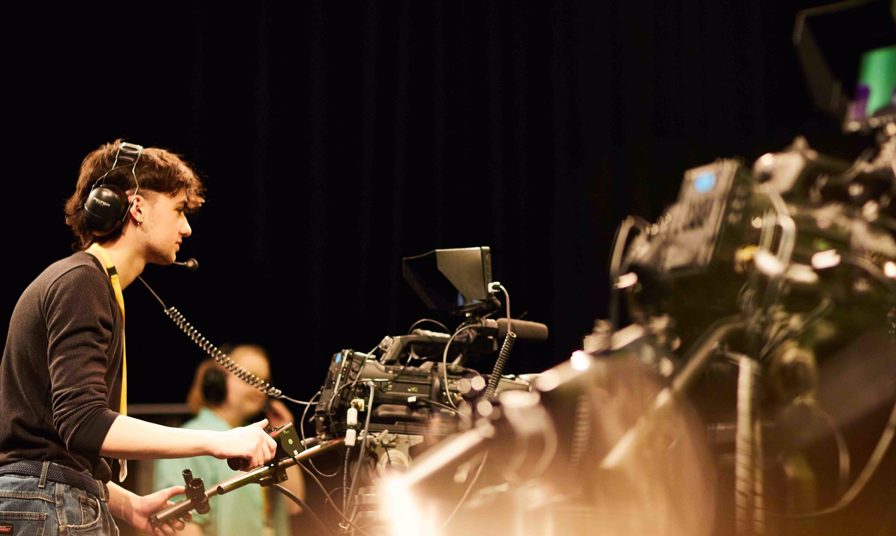
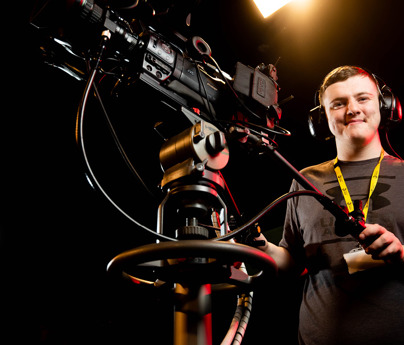
- Have the chance to work in our TV studio, edit suites, recording studios and Mac suites.
- Develop your skills with state-of-the-art production suites on a modern campus.
- Learn how marketing teams plan and produce content to appeal to their audiences.
We are delighted to be delivering T-Level qualifications in Media, Broadcast and Production. This qualification is ideal if you wish to progress to a career in the media sector, with a focus on routes into content creation and media.
-
Overview
We are delighted to deliver T-Level qualifications in Media, Broadcast and Production. This is a two-year qualification equivalent to three A-Levels. It includes a core component and an occupational specialism in Content Creation and Production.
The T-Level curriculum has been developed by the Government in collaboration with employers and businesses to ensure that the content meets industry needs and prepares you for the workplace. It combines contextual knowledge with practical learning and a minimum of 315 hours of industry placement with an employer.
This qualification is ideal if you wish to progress to a career in the media sector, with a focus on routes into content creation and media.
-
What will I study?
Year One
Core Component
In your first year, you will build a strong foundation in:
- Understanding the Creative Media Economy
Industry structure, roles and responsibilities, supply chains, funding models, finance and employment law. - Understanding Media Context and Practice
Audience needs, research methods and project management. - Comprehending Professional Standards
Ethics, legislation and regulation, administration, continuing professional development (CPD), and health and safety.
Employer-Set Project
You will complete an externally set project where you research, analyse and respond to a professional brief under exam conditions.
Year Two
Occupational Specialism – Content Creation and Production
In Year Two, you will be introduced to practical techniques including camera operation, sound recording and editing. You will consider the practicalities of planning and producing content for a variety of platforms, while taking into account the ethical, legal and logistical constraints of the industry.
The occupational specialism in Content Creation and Production will develop your skills in:
- Responding to a brief and researching stakeholder needs
- Generating and developing ideas
- Producing effective pre-production documents while meeting client requirements
- Practical media skills such as camera operation, editing and sound recording
Industry Placement
You will complete a minimum of 45 days (315 hours) in an industry placement, giving you valuable real-world experience and insight into the workplace.
- Understanding the Creative Media Economy
-
Entry Requirements
You will need a minimum of 5 GCSEs at Grade 4 including English Language and Maths, or completion of a Level 2 course with merit (plus English Language and Maths).
-
How will I be assessed?
Year One
- Core component: 2.5-hour written examination
- Employer-set project: 16.5-hour assessment under exam conditions
Year Two
- Occupational specialism: 35.5-hour practical project, assessed under exam conditions to a brief set by the awarding body
-
What can I do next?
The course ensure students have the knowledge and skills needed to progress into highly skilled employment, an Apprenticeship or higher-level study, including university, within the specialist area of Media, Broadcast and Production.
Once you have completed this qualification, you could progress to higher-level Apprenticeships such as Postproduction Technical Operator, Assistant Technical Director (visual effects), Media Production Coordinator, or Assistant Recording Technician depending on your skills or experience.
Students could also progress to relevant Higher National Certificate (HNC) or Higher National Diploma (HND) programmes or degree programmes, such as our BSc (Hons) Creative Industries.
-
Your Study Programme
-
Explore Your Career Options
Our T-Level Media, Broadcast and Production supports progression to job opportunities in Media, Broadcast and Production including:
- Junior Broadcast Systems Operator (TV/Radio)
- Junior Production Assistant (Camera)
- Junior Broadcast Assistant
- Outside Broadcast Operation assistant
- Audio production assistant
- Runner
- Post-production Runner
- Junior Event Technician (Lighting)
- Junior Event Technician (Sound)
- Junior Event Crew
- Production Office Assistant
- Junior Content Assistant
- Social Media Assistant/Co-ordinator
- Junior Digital Producer
- Junior Video Producer
-
Discover other courses in Media
Explore your career options